Keyframe / Directable Camera Control: Mastering Cinematic Control in AI Video Generation
The era of video content creation has undergone a transformative revolution thanks to artificial intelligence (AI). However, a significant challenge in AI-generated video often lies in the lack of precise artistic control, especially concerning camera movement. We introduce a cutting-edge solution: Keyframe / Directable Camera Control, a technique that bridges the gap between AI automation and the director’s cinematic vision.
What is Keyframe Camera Control in the Context of AI?
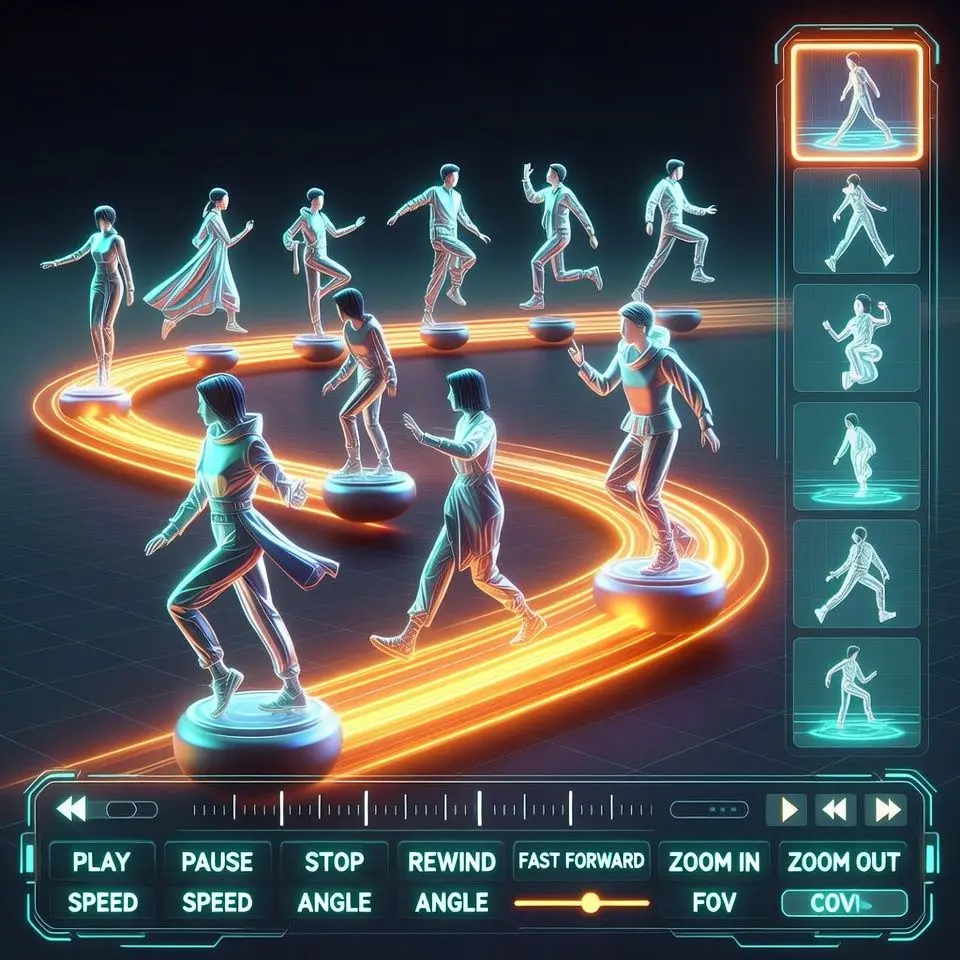
Traditionally, keyframing is the foundation of animation and post-production, where key points (keyframes) on a timeline define the position, rotation, or scale of an object (in this case, the camera) at specific moments. In our AI Video service, this technique is adapted to steer the video generation engine.
Instead of receiving a ‘static’ video output or one with unpredictable camera movements, clients can now specify a series of camera control points—providing 3D spatial coordinates (or viewpoint parameters) at desired time intervals. The AI then seamlessly interpolates the transitions between these keyframes.
Directable Cinematic Precision
Directable Camera Control means your final output is no longer a matter of probability, but the result of intentional artistic decisions. This enables the creation of complex and specific sequences:
- Precision Dolly Shots: Ensuring the camera moves forward or backward with exact speed and distance across the AI-generated scene.
- Dynamic Crane Shots: Defining dramatic rises or descents in camera height, perfectly tracking a subject.
- Calibrated Orbits and Pans: Specifying horizontal viewpoint sweeps (pans) or rotations around a subject with precise degrees of rotation.
- Controlled Focus and Depth of Field (DOF): While focus is an additional parameter, keyframe control allows for emphasis on specific objects as the camera moves.
Why Is This Technique Crucial for Content Production?
AI-generated video is powerful for rapid visualization, but for professional needs—advertisements, film trailers, or educational material—control is king. Keyframe Control delivers:
- Narrative Consistency: Ensuring every shot meets the planned pacing and storyline requirements.
- Reduced Iterations: By directly guiding the camera, the need to ask the AI to regenerate scenes repeatedly due to incorrect camera movement is minimized, saving time and computational costs.
- Seamless Post-Production Integration: The resulting video is easier to integrate into traditional editing workflows because the movements are predictable and repeatable.
Our Workflow: Human and Machine Collaboration
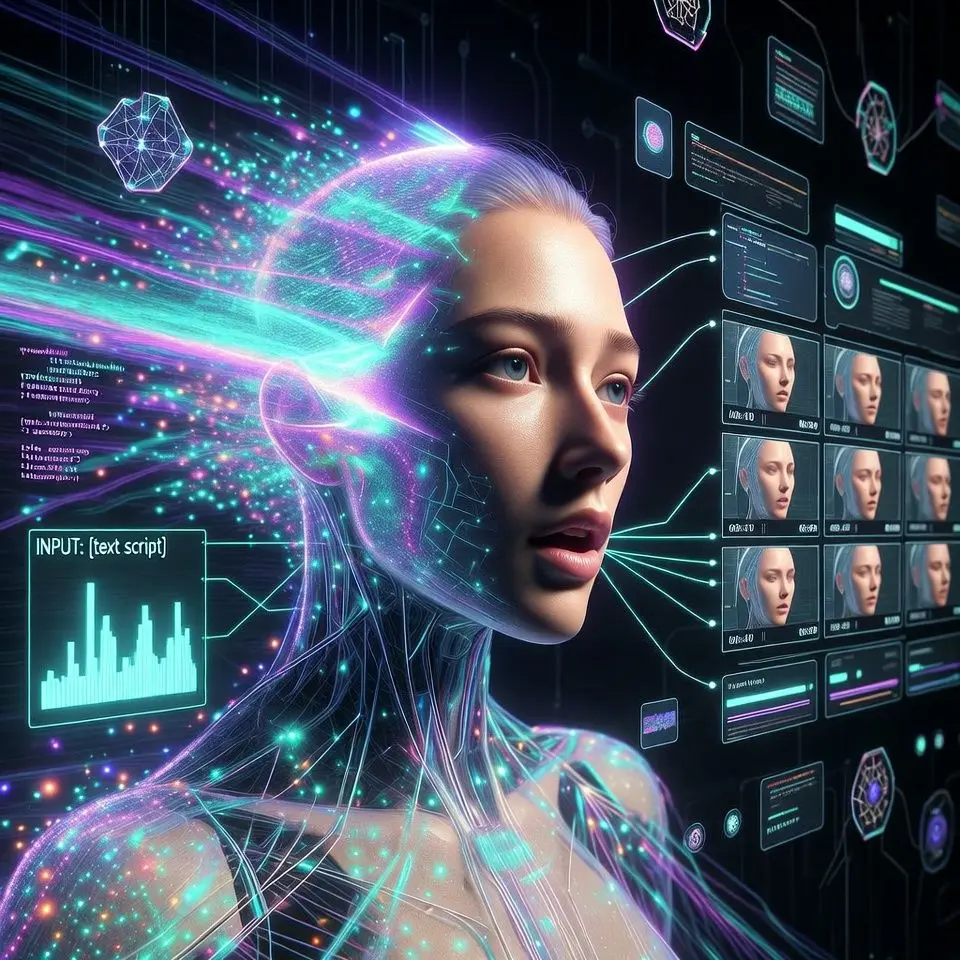
Our AI Video service utilizes a diffusion model architecture that supports external spatial parameter input. Clients provide the script or visual description, and then define their ideal camera ‘path’ using a keyframe-based interface:
- Basic Scene Definition: Clients determine the text prompts and visual style.
- Camera Keyframe Setting: Clients define the key points (e.g., Frame 0: Position X=0, Y=10, Z=5; Frame 50: Position X=10, Y=5, Z=12).
- AI Interpolation: The AI engine fills the gaps between keyframes with smooth camera motion, while ensuring the visual content remains relevant to the prompt.
- Final Output: The generated video features camera movement that is directed and fully controlled by your creative vision.
With Keyframe / Directable Camera Control, we do not just generate images; we direct your gaze through the virtual world created by AI.
![Visual illustration of improving video frame rate using AI Frame Interpolation technology.[/:en]](https://cdnjasavideoai.madxartwork.eu.org/wp-content/uploads/images/Frame Interpolation AI-jasa-video-ai.webp "Frame Interpolation AI")
![Illustration of the AI concept transforming storyboard sketches into dynamic video clips.[/:en]](https://cdnjasavideoai.madxartwork.eu.org/wp-content/uploads/images/Multi-shot Storyboard-to-Video-jasa-video-ai.webp "Multi-shot / Storyboard-to-Video")